NRPP Training/Education Hours
Certified as a Radon Measurement Professional/Mitigation Specialist
Certified Professionals
Stay safe with radon testing.
Radon is a naturally occurring radioactive gas released from rock, soil, and water due to the natural decay of uranium. While outdoor radon levels generally pose a low threat to human health, radon can accumulate to dangerous levels inside buildings, including through water sources. Radon in water testing is an important part of assessing your home’s overall radon risk because radon can dissolve into groundwater and enter your home through plumbing. You can’t see, smell, or taste radon, but elevated levels in your home—whether from air or water—may negatively affect the health of your family.
Radon exposure is the second leading cause of lung cancer in the United States and the number one cause among non-smokers. The U.S. Environmental Protection Agency estimates that radon causes more than 20,000 lung cancer deaths in the country each year. Only smoking causes more lung cancer deaths. If you smoke and your home has radon, your risk of lung cancer can be even higher. That’s why comprehensive radon testing, including radon in water testing, is crucial to protect your household’s health
Take a look at our frequently asked questions and get in touch with us today to get started!
Alabama And Radon
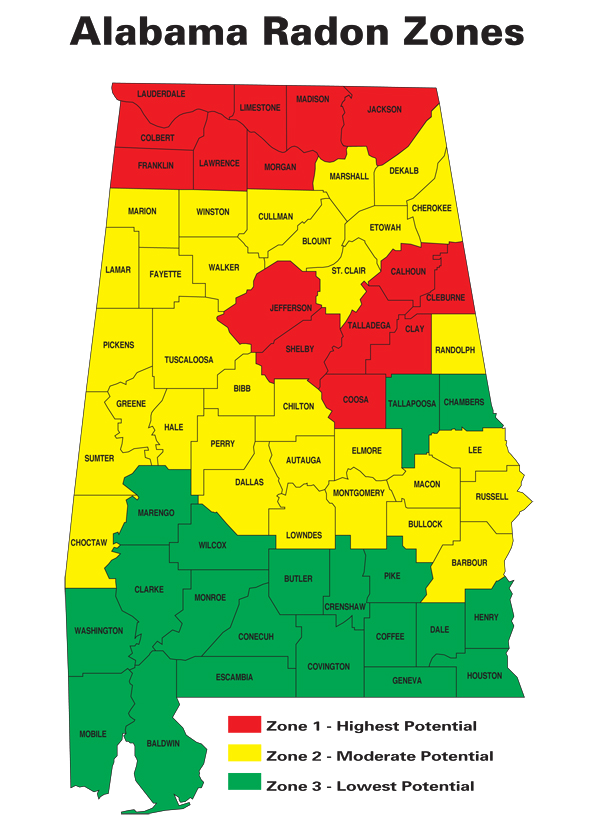
See the radon zones in our state.
Radon is found in elevated levels in homes in every state. Does Alabama have a radon problem? Yes, Alabama has 15 counties that are designated as Zone 1 (having the highest levels of radon in the country). Nine north Alabama counties have this Zone 1 designation including Madison and Jackson counties.
In an effort to continue to offer our customers the indoor air quality services they need, we began exploring the local radon situation in 2005. In 2006 we began educating ourselves and obtained our Radon Measurement Certification #104240 RT in October. In February 2007, we obtained our Radon Mitigation Certification 104241 RMT.
In Madison County approximately 32 percent of the homes test at elevated levels most between 4 to 12 pCi/L. While in Jackson County only approximately 24 percent of the homes test at elevated levels, but the levels vary more widely between 4 to 28 pCi/L. According to EPA’s A Citizens Guide to Radon, “Testing is the only way to know if you and your family are at risk from radon.” EPA and the Surgeon General recommend testing all homes below the third floor for radon. EPA also recommends testing in schools.
Radon Inspection FAQ
What is radon?
Radon is a naturally occurring radioactive gas released from rock, soil, and water as uranium breaks down. It is invisible, odorless, and tasteless—meaning you can’t detect it without proper testing.
Why is radon dangerous?
Radon exposure is the second leading cause of lung cancer in the United States and the leading cause among non-smokers. According to the U.S. Environmental Protection Agency (EPA), radon is responsible for more than 20,000 lung cancer deaths each year. The risk is even higher for smokers living in homes with elevated radon levels.
How does radon enter a home?
Radon can enter your home in two primary ways:
Through the soil beneath your foundation (the most common source)
Through water sources, especially groundwater from private wells
Radon in water can be released into the air during everyday activities like showering, washing dishes, or doing laundry.
How do I know if I need radon testing?
Because radon cannot be seen, smelled, or tasted, every homeowner should consider testing—especially if you live in a Zone 1 county or have never tested your home before.
